Cleaning the glass of fireplace stoves
Author: EkoBIT team
Gray or completely blackened glass on the stove spoils the view of the fire and often signals a minor problem in operation. We have a lot of experience with fireplaces apartment building cleaning Here is an easy-to-understand, proven procedurehow to clean fireplace glass and how to reduce soiling next time.
Before you start (safety and security)
-
Allow the glass to cool. Ideally at hand temperature. Never pour cold water over hot glass.
-
Use soft aids. Microfiber, fine sponge; without wire and abrasive powders.
-
Protect the gasket and paint. Apply cleaners only to the glass, not to the sealing cord or painted parts.
-
Ventilate. Stronger agents can irritate. Always read the label.
Quick procedure for common dirt (5-10 minutes)
-
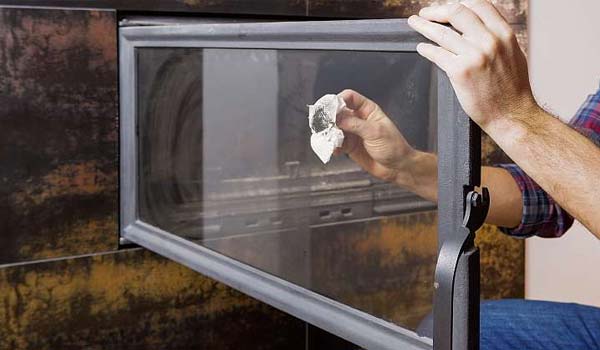
Pre-cleaning: Wipe away loose dust and soot with a dry paper towel.
-
Soapy water: Put warm water with detergent on a soft sponge, wipe in a circular motion.
-
Finishing: Dry microfiber - buff until streaks disappear.
-
Seal inspection: Once you have the door open, take a look at the condition of the sealing cord.
Tip: If soapy water isn't enough for you, move on to one of the more effective methods below.
When the glass is heavily frosted: proven methods
1) Ash "paste" (economical and surprisingly effective)
-
Moisten a tissue easily soak it in soft of (sifted) cold ash from the stove.
-
Wipe off the baked-on soot in a circular motion.
-
Wipe with clean water and finish with a microfiber cloth.
It works because the fine ash acts as a gentle abrasive – but be gentle to avoid micro-scratches.
2) Special stove/fireplace glass cleaners
-
Spray or gel for soot and tar (intended directly for fireplace glass).
-
spray, leave on for 2-5 minutes, then wipe and rinse with a damp cloth.
-
Advantage: quickly dissolves greasy deposits and "tar maps".
3) Vinegar water (gentle home option)
-
A mixture 1 part vinegar : 3 parts water in a sprayer.
-
Spray, act briefly, wipe, polish.
-
Degreases and leaves a streak-free surface.
4) Razor scraper (only for "maps" and with great care)
-
Use it glass scraper with new blade, guided flat without pressure.
-
Only for resistant deposits, always after softening with a cleaner.
-
If you are not sure about the surface treatment (e.g. special layer), you should skip this method.
What to avoid: steel wool, coarse powders, abrasive sponges, universal "decolorizers" and aggressive oven cleaners on painted parts - they can damage the ceramic glass (Robax, etc.) and the surrounding paint.
Why glass gets dirty and how to prevent it
Blackened glass is not only cosmetic. It is often a combination of fuel, air and heating method.
Main causes:
-
Wet or poor quality wood. (Optimal humidity up to 20% – consider cheap hygrometer.)
-
Low air / fire suffocation. Prolonged "suffocating" burning at low temperature promotes soot and tar.
-
Clogged chimney / clogged drafts. Weak draft = smoke and soot stay in the combustion chamber and settle on the glass.
-
Poor fire distribution. If the flames do not "wash" the glass (air-wash), more black.
Prevention in practice:
-
Fuel: Hard, well-dried wood (min. 1-2 years of drying), smaller diameter logs; no varnished or wet wood.
-
Top-down heating: Thicker logs down, smaller ones and chips up - the fire catches better and immediately burns cleaner.
-
Air: At the beginning of the burning more primary air, let the stove heat up quickly. Reduce until flared up.
-
Temperature: Short intense "heating" (higher temperature) sometimes "burns" the soot off the glass.
-
Maintenance: Chimney and stove 1–2 times a year let it clean. Check door seals and air intake.
-
Service: The manufacturer's manual is not a formality - see how to correctly adjust the flaps and air intakes for your model.
Frequently Asked Questions (FAQ)
Can I use regular window cleaner?
For light dirt yes, but for soot and tar tends to be weak. Always without abrasive particles and preferably without perfumes.
Will newspaper and ash help?
Yes - moisten, lightly into a fine ash, swirl gently. Finally, wipe with clean water and polish.
How often to clean the glass?
Take it easy for a short "wipe". after each heating, thorough cleaning as needed. The longer you put it off, the harder it is for the dirt to go down.
The glass darkens too quickly - is it a defect?
Not necessarily, but it's a signal. Check wood moisture, air settings, door seals and chimney draft.
Quick checklist version
-
Cool the glass → wipe off dry soot → soapy water or ash/cleaner → rinse → finishing with microfiber.
-
Prevention: dry wood, enough air, sometimes higher temperature, regular cleaning of the chimney, inspection of the seals.
Do you need help with cleaning after the heating season or with cleaning around the fireplace? Contact us - we will advise, come and do it for you.