How to control humidity at home: a practical guide to healthy living
Author: EkoBIT team
Moisture in an apartment or house is not just an aesthetic problem. It contributes to the formation of mould, worsens air quality, can negatively affect health and gradually destroy plasters, furniture and floors. The good news is that most moisture problems can be solved by modifying common habits and taking a few practical steps.
In this article, you will learn how to recognize moisture, what causes it and how to fight it effectively.
1. How to recognize that you have excessive humidity at home
The first step is to know that the problem even exists. Too high humidity can be indicated by:
-
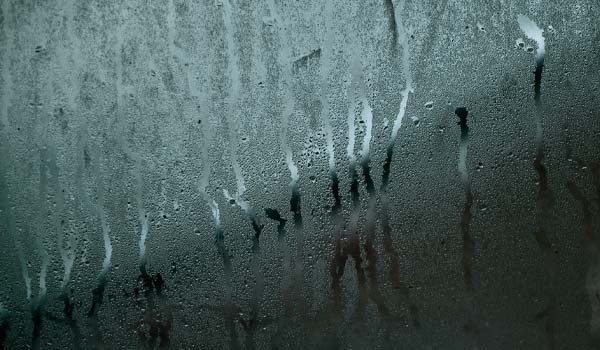
Misty windows (especially in the morning or on cooler days).
-
Dark maps and stains on the walls, often in corners or behind furniture.
-
Mold in the bathroom, around windows or behind cabinets.
-
The smell of mustiness in the room, on textiles or furniture.
-
Peeling plaster or swelling wooden elements.
The ideal indoor humidity usually ranges around 40-60%. For a more accurate idea, you can buy hygrometer - a simple device that will show the current status.
2. The most common causes of moisture in the apartment
Moisture in the home is caused by a combination of several factors:
-
Insufficient ventilation - closed windows, little fresh air.
-
Cooking, showering, drying clothes indoors - these activities release large amounts of water vapor.
-
Thermal bridges and poor insulation - cold places on the walls where moisture condenses.
-
Leaks in the structure, leaks, malfunctions of the roof or gutters.
-
Older houses without insulation against ground moisture - moisture can enter the masonry from below.
It is important to look for the causes systematically - sometimes adjusting the ventilation regime will help, other times it is necessary to solve a construction problem.
3. Proper ventilation: the basis of the fight against humidity
Ventilation is the simplest and often the most effective weapon against humidity.
How to ventilate effectively:
-
Short and intense - instead of all-day microventilation, it is better to open the windows wide open for 5-10 minutes several times a day.
-
Ventilation across the apartment - open two opposite windows or doors and create a draft that quickly exchanges air.
-
After showering and cooking ventilate immediately until steam is visible.
-
In the bedroom it is advisable to ventilate in the morning after waking up, when the air humidity is often the highest.
In panel and apartment buildings, it is also functional common ventilation systems and regularly maintained common areas - corridors, cellars and drying rooms, where moisture often accumulates.
4. Drying clothes and other sources of moisture
Drying laundry in the apartment is one of the biggest sources of moisture. One full dryer can release several liters of water into the air.
What will help:
-
If possible, use a dryer or dry your clothes outside.
-
When drying indoors, do so in a room that can be well ventilated separate and ventilate intensively.
-
Close the door to prevent moisture from spreading to other rooms.
Other sources of moisture:
-
Long hot showers without sufficient ventilation.
-
Cooking without using a hood or covering pots.
-
A large number of flowers in the interior, aquariums or indoor fountains.
5. Heating and thermal bridges
Cool walls and corners are ideal places for moisture to condense. Warm air holds more water vapor - when it hits a cold surface, the water condenses.
Practical recommendations:
-
Maintain uniform temperature throughout the apartment - sharp fluctuations in temperature and humidity are not good.
-
Do not cover the radiators with heavy curtains or furniture.
-
Do not place large cabinets close to the wall - leave a few centimeters of space for air circulation.
-
For older homes, consider insulation or improvement of window fillings, if thermal bridging is a significant problem.
6. Dehumidifiers and other helpers
If the humidity is high for a long time, you can consider the purchase air dehumidifiers:
-
Electric dehumidifier - an effective solution for longer-term problems. Suitable for bathrooms, basements, cellars and rooms where mold forms.
-
Chemical dehumidifiers - they use granules that bind water to each other. It is suitable as an addition to smaller spaces (cellars, wardrobes, storage rooms).
But a dehumidifier alone is not enough, if there is one a fundamental construction problem - in such a case, it is advisable to contact an expert (statics, construction company) and look for a long-term solution.
7. Mold: how to deal with it and when to warn
High humidity often leads to mold growth. These are not just "black spots on the wall", but can also be a health risk - especially for allergy sufferers, asthmatics, children and the elderly.
How to proceed:
-
Remove visible mold - use special preparations against fungi (fungicides) and follow the instructions.
-
Focus on the cause - improve ventilation, increase the temperature of the walls, adjust the furniture, drying clothes, etc.
-
If the mold returns repeatedly, do not delay professional consultation - it may be a problem with the construction of the house (leakage, rising damp).
In apartment buildings, mold often appears in common areas - in corridors, basements or drying rooms. Regular and professional cleaning of common areas of apartment buildings helps keep these spaces clean, ventilated and free of debris that can support moisture and mold.
8. When to consider professional help
If:
-
you have damp maps on the walls despite regular ventilation,
-
mold appears in several rooms,
-
you feel stale air for a long time,
-
or you suspect a leaking roof or poor insulation,
it is advisable to turn to experts - construction technicians, companies specialized in masonry rehabilitation, or the house manager.
Summary: what works for humidity at home
-
Regular and correct ventilation (short and intense).
-
Reasonable heating and limitation of thermal shocks.
-
Restrictions drying clothes inside or ensuring adequate ventilation.
-
The solution thermal bridges and problems with insulation.
-
If necessary use air dehumidifiers.
-
Timely response to mold and searching for their causes.
Thanks to these steps, you can significantly improve the air quality in your home, extend the life of materials and create a healthier environment for the whole family - whether you live in a family house or an apartment building with common areas, where regular and professional cleaning also plays an important role.